At this stage, it's well worth thinking about working organic matter into your soil. For example, if you have very sandy soils, organic matter will add structure to the soil, and improve its ability to retain moisture and nutrients. If you have heavy clay soil, the addition of organic matter will help break up the clay and make it easier to work with. Try to avoid using peat as the source of organic matter; it is better to use Grass Factory Eco Organics compost.

Dig the area over, removing any weeds, stones and building waste. Then compact your soilwhole area – this consolidates the soil, making sure that you are not left with soft spots. It's worth taking time over this part of the job to avoid uneven settling of the soil later on.
Level the surface and eliminate drainage problems by making the soil drain away from the house. Roll the area with a roller to compact soil and to level the desired areas. Once you're satisfied, water the ground and check for puddles.
When the soil dries enough to be worked, move soil from the high to the low spots. Cover crops, also called green manure crops, help loosen clay or compacted soils with their roots and by adding organic matter. They also prevent nutrient loss and erosion during the non-growing season. Leguminous cover crops, such as winter rye, alfalfa, hairy vetch and clover, which add nitrogen to the soil, are usually planted at the end of summer or early fall.
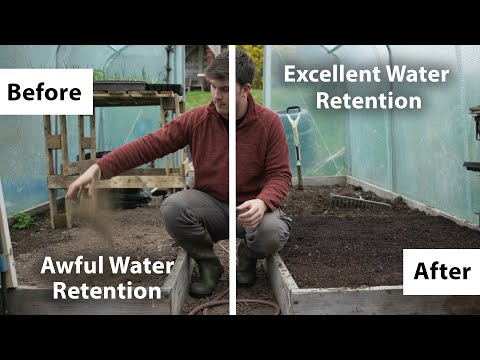
Weighty gardening equipment, foot traffic and heavy downpours cause soil compaction, and clay and loam soils are most susceptible. However, even sandy soils can harden when compressed by heavy equipment. Excessive weight and rain close the open pores between the soil particles; as a result, the soil hardens. Clay soils often drain very slowly after rainfall, and then they harden and crack when the weather turns dry and warm. To avoid compacting soil, create paths to avoid walking on growing areas. Don't dig the soil excessively or when it's wet, and don't mix sand into clay soil, which makes it like concrete.

Regularly spreading organic matter over the soil surface is the best long-term solution to soil compaction. Organic matter includes compost, shredded leaf mulch, wood chips, straw and chopped leaves. Apply a 3- to 4-inch layer of compost or a layer of wood chips or shredded leaf mulch 2 to 3 inches deep over bare soil in flower beds.

Without any further help, soil organisms will incorporate the organic matter and begin to open up the soil. If you'd like to quickly break up a hard soil surface for planting, mix the organic matter into the top 3 to 6 inches of soil with a spade. To help soften hard soil in a vegetable garden, add a 2-inch layer of compost twice a year and mix it into the top 2 inches of soil.

If the soil in your garden or vegetable patch is bare over winter, spread a layer of mulch over it to protect it from heavy rainfall. Recently, utilization of cover crops to remedy or prevent compaction has received a lot of interest. Cover crops are meant to prevent compaction by increasing soil organic matter, root growth and surface residues.

Organic matter increases aggregate stability, which reduces the soil's susceptibility to compaction. Root growth of the cover crops may remediate compaction if it is sufficient to penetrate compacted layers. However, despite research showing increased root growth after cover crop treatments, it has not shown consistent yield improvements following soil conditioning cover crops. Therefore, it is recommended that cover crop strips be planted across a field suspect of being compacted to observe the response of the following crop.
Similarly, deep tillage strips are also recommended to determine if it is beneficial. In both cases, it will take multiple years to properly assess the yield benefits of these compaction alleviation practices. Both soil type and weather conditions influence their effectiveness in improving yield of the following crop.

Unlike sandy soil, clay soil holds moisture well—sometimes too well. Fine soil particles stick together, allowing little room for drainage or for air to reach plant roots. The solution is to break up the soil and add lots of organic matter such as compost, shredded leaves, peat moss and gypsum over time.
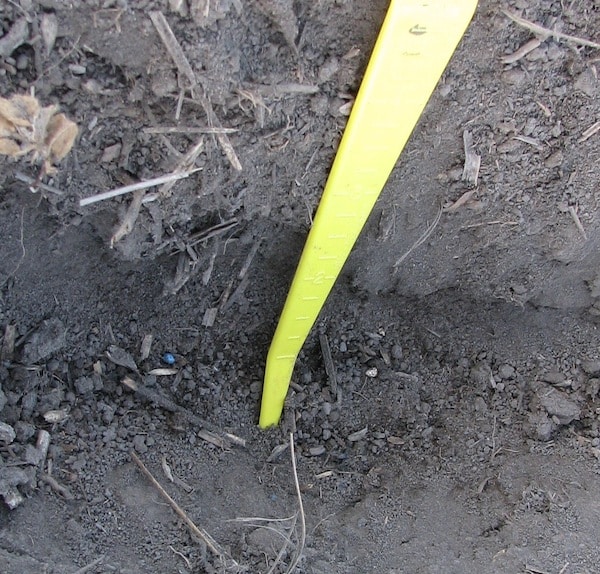
The practice of graze-out in a no-till system is much more concerning than dual purpose management, because it extends grazing into the wetter spring months. Graze-out can also result in the near complete removal of surface residues, which can be very damaging to the soil surface. Figure 1 shows surface compaction in a soil collected in late July after grazing left the surface bare. Here, grazing resulted in a highly compacted condition. Additionally, the removal of residue allowed for crusting and further prevented water infiltration.

This is a perfect example of the extent to which surface soils can be damaged through overgrazing. Grazing at levels that maintain surface residue, or removing cattle to allow regrowth, will generally prevent this condition from occurring. If regrowth is limited, planting a cover crop is recommended to regain surface residues. Figure 2 shows a soil with excellent granular and blocky structure near the soil surface, despite being grazed annually for more than15 years. This is an example of how grazing cropland can coincide with good soil health when thoughtful residue management and stocking rates are utilized. However, if the damage is so severe that a cover crop cannot be established, tillage is the only option in reclaiming productivity.
How To Improve Dry Hard Soil Compaction is most likely to occur with heavier soils like clay and loam, but when heavy equipment is used, sandy soils can become compacted. These are soil particles that are packed closely together. The problem may be compounded by events that have happened to the soil over the course of years.
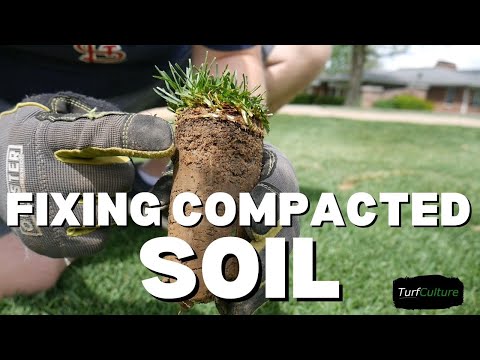
The pore spaces are reduced to the point that air and water cannot move freely and plant roots cannot grow easily into the surrounding soil. The soil could remain overly wet longer than is healthy for the plants growing there. Many turf professionals are faced with soils that are less than desirable.
Heavy use and high traffic areas become compact and show stress. Getting water to the roots is the secret of Revive's success. Its unique formula allows water to move deeper down into the soil, bringing organic lawn fertilizers and air with it. This results in much stronger grass roots that produce a thick green, healthy lawn. Revive also contains iron to help keep the turf greener. Revive helps compliment any organic fertilizer application schedule.

If you think your soil is depleted of nutrients or soil microbes do a soil test and then apply Revive is to improve soil structure. Revive along with organic lawn fertilizers is a sure way to improve soil structure and strengthen the grass plant roots. Use a spade to add about 2-3 inches of organic matter into the topsoil. Compost, animal manure, and peat moss not only improve the soil's moisture retention but they also attract worms that help water flow through the soil. If you're dealing with heavy clay soil, use a mixture of sand and organic material to reduce waterlogging.
Mulching – Clay soils can tend to speed water runoff because water isn't absorbed as quickly into clay soils as it is other soils. Clay soils also tends to stick to the bottoms of your shoes, which can make a mess when you go indoors. By adding a layer of mulch to clay soil, you not only help keep the house clean, but can reduce the number of weeds that sprout. As mulch decomposes,it will enhance nutrition and water retention, which ultimately allows for better plant growth. Mulch will slow down water run-off allowing clay soil more time to absorb, and store, water. A layer of mulch is also cooler than exposed soil which helps to reduce temperatures overall in the garden.
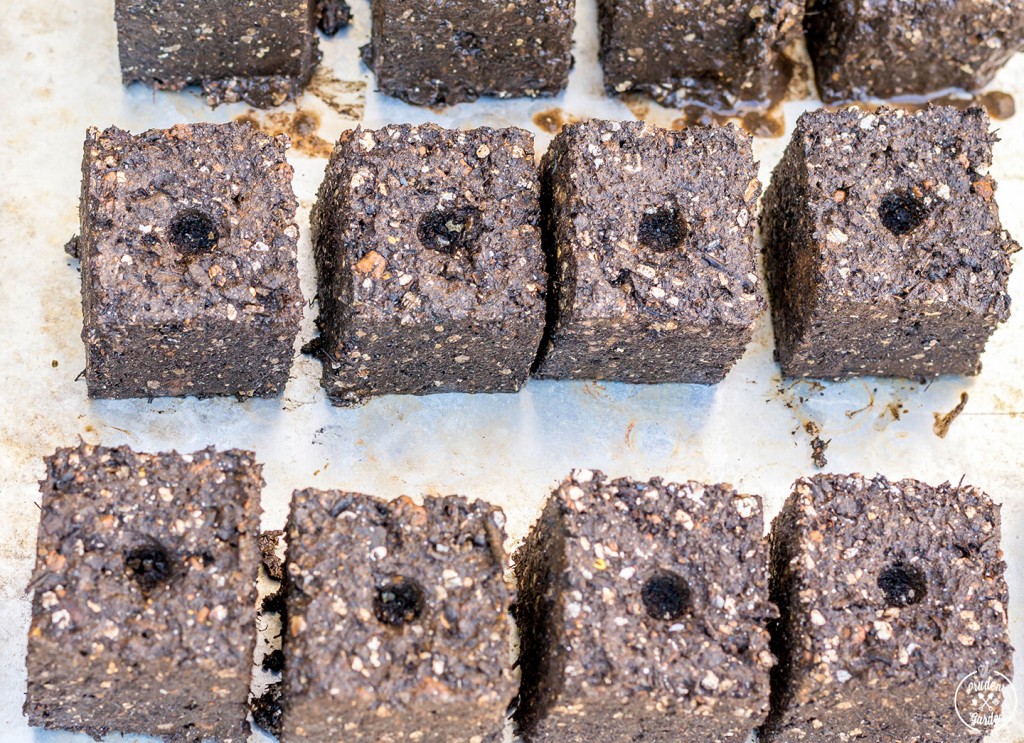
I always see things on how to work with sandy, silty, or clay soils, practically nothing on peat soils. I moved to an area this last Fall, that had a lot of glacier activity and is a meadow or grass land now. We would like to grow a garden, but we have black peat soil for about 14 feet down. I used a home soil test and found no nitrogen in the soil. There is some phosphorus and a small amount of potassium. What should we do to our soil to be able to grow a vegetable garden and fruit trees?
Gypsum is easily applied to the soil surface with a regular lawn spreader. It's an ideal amendment for improving soil structure and relieving compaction in existing lawns and gardens. To fix compacted soil, which is soil that has little to no air space, break it up to make it hospitable for your plants again. Start by shifting livestock, machinery, vehicles, and foot traffic away from the compacted area to give the soil a rest. If you use the compacted area for farming or gardening, move your plants somewhere else for at least 1 growing cycle. Instead, plant a cover crop, like winter wheat or ryegrass, to allow the roots to break up the soil.

For smaller, grassy areas that are compacted, use a small metal garden fork to poke holes in the soil so air, water, and roots can enter the area. However, when tackling a larger area, use a rototiller with an aeration attachment. Cover crops help break up hard soils with their roots and by adding plant matter to the soil. Sow cover crops when the soil is bare, such as over winter. Before planting the area with desired plants in spring, dig up the cover crop and bury the plants in the soil.
Cover crops include buckwheat , cereal rye and crimson clover , which are annual plants that naturally die down at the end of their growing seasons. Department of Agriculture plant hardiness zones 10 through 12, and cereal rye is hardy in USDA zones 3 through 7. Crimson clover is a winter annual in USDA zones 6 through 9 and a summer annual in zones 3 through 4. Soil crust formation involves the processes of dispersion, segregation and drying. The soil is dispersed by the impact of raindrops on the surface.

This dispersion is followed by segregation, where clay particles are removed, leaving silt and sand particles at the surface. This causes the soil particles at the surface to be very closely packed and to have a high bulk density. The strength of this crust is then increased upon drying.
Crust formation is most detrimental to crop growth in soils with high silt content because the crust can be very dense and does not crack upon drying. Crusts can vary in thickness from less than a ¼-inch to several inches. These layers restrict water movement, oxygen diffusion and seedling emergence. The crusts can also affect water and wind erosion and reduce surface water infiltration. Hydrophobic soil is a common issue in Australia, our hot climate and unreliable rainfall can cause havoc on our soil. Hydrophobic soil occurs when a waxy residue builds up on the soil particles resulting in it repelling water rather than absorbing it.

It is most common in sandy soils, dried out potting mix and soils containing unrotted organic matter. If water runs off or pools on the surface leaving the soil underneath dry, you've got Hydrophobic soil. Luckily, it is not too hard to fix, here's a few common ways you can improve your soil to make it water loving, or 'hydrophilic'. Clay's potential as one of the best soil types for plant growth lies in its unique properties. Managed well, clay soil typically requires less irrigation and less fertilizer, and leads to healthier plants all around. Healthy soil typically is more than 40 percent pore space, with large pores that promote drainage and small pores which help store water.
This combination enables air and water to penetrate, promotes good drainage, and allows soil organisms to breathe and plant roots to grow. Machinery, foot traffic and pounding rain compact the soil and make life in the soil difficult. Compacted soils can flood and also be susceptible to drought, since water runs off rather than infiltrating. You can repair compacted soil by rebuilding its spongy structure.

For a large vegetable garden, another solution is to grow a cover crop at the end of the season, then mow and turn in the following spring before planting. By mowing and turning the mowed tops in, the soil is additionally loosened. Cover crops could include annual ryegrass, winter wheat, winter rye, buckwheat, oilseed radishes and hairy vetch. If compaction is less than 10 inches deep, a chisel plow can be used to break up the compacted layer.

If compaction is observed below this depth, deep tillage may be required. No studies are available in the central plains to evaluate differences in crop response between the various deep tillage options. Research at OSU suggests few Oklahoma soils have compaction zones deep enough and with high enough bulk densities to warrant deep tillage. First, deep tillage should be conducted when the compacted zone is dry. Secondly, sufficient rainfall must be experienced after deep tillage to recharge the profile. In contrast, deep tillage will increase the depth to which soils will become dry, if drying conditions are experienced.

This can result in decreased yields after deep tillage. If this corresponds to an abrupt decrease in root growth or horizontal root growth, compaction may be the cause. Horizontal root growth or an abrupt decrease in root growth also can be caused by a lack of soil moisture at or below this depth. It is always best to evaluate compaction after a period of rainfall sufficient to saturate the profile and when evapotranspiration is low. It is ideal to evaluate compaction in the early spring in Oklahoma when soil moisture contents are generally the greatest.

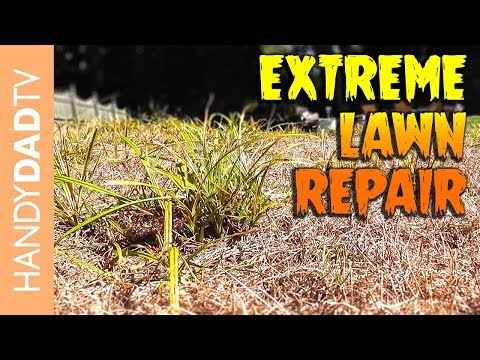
If dry soil is found below a suspected compacted layer after a period of rainfall, it is likely that some form of compaction is limiting water infiltration. Hostile climates, years of use, pets, irregular rainfall, invasions of lawn pests and weeds – or simply neglect – have left many gardens looking ragged. It's a big job, but like a new floor or roof, it will last a long time if you do it right.


No comments:
Post a Comment
Note: Only a member of this blog may post a comment.